5371 Merchants View Square, Haymarket, VA 20169

Dental disease is one of the most common and most overlooked health conditions in cats and dogs. By age three, most pets already show signs of gum disease—yet many pet owners don’t realize it until the problem has quietly progressed for months.
This guide walks you through the early warning signs of pet dental disease, what each stage means for your pet’s health, how to build a home care routine, and when it’s time to schedule a professional dental cleaning with a veterinarian near you. Catch the signs early, and you can protect your pet from pain, tooth loss, and costly treatments down the road.
Why Pet Dental Health Gets Overlooked
Most pets don’t cry out when their teeth hurt. They keep eating, keep playing, and keep acting normal—even when their gums are inflamed and their teeth are covered in tartar. This stoic behavior is instinctive, but it leaves owners in the dark.
Dental disease doesn’t just affect the mouth. Bacteria from infected gums can enter the bloodstream and travel to the heart, kidneys, and liver. What starts as a little plaque on the molars can quietly become a systemic problem. That’s why routine dental checkups matter as much for pets as they do for people.
The 4 Stages of Pet Dental Disease
Stage 1 — Early Gingivitis
At this stage, plaque has begun to accumulate along the gum line. The gums may look slightly red or puffy at the edges, but your pet isn’t in pain yet. This is the stage where intervention is easiest and most effective.
What to look for:
- Mild redness along the gum line
- Light yellowish film on teeth near the gums
- Occasional bad breath that wasn’t there before
Stage 1 is fully reversible with professional cleaning and a solid home care routine.
Stage 2 — Established Gingivitis
Plaque has hardened into tartar (calculus), and gum inflammation is more pronounced. Your pet may show subtle discomfort while chewing hard food or toys.
What to look for:
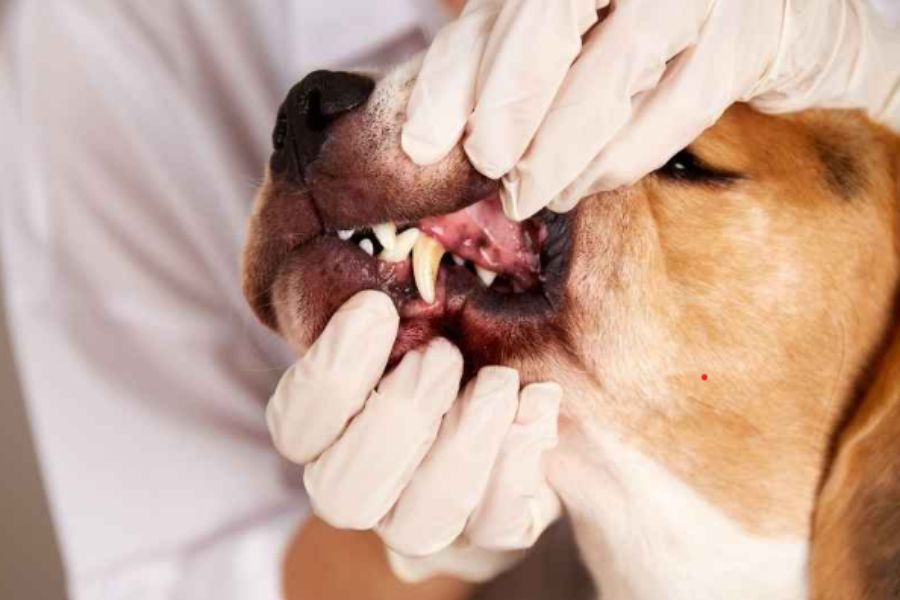
- Visibly yellow or brown buildup on teeth
- Swollen, red gums that may bleed when touched
- More consistent bad breath
- Occasional pawing at the mouth
Stage 3 — Early Periodontitis
The infection has started to affect the bone and ligaments that anchor the teeth. There is now some permanent damage, though teeth can still be saved with proper pet dental care.
What to look for:
- Noticeably loose teeth
- Receding gums
- Difficulty picking up toys or chewing dry food
- Drooling more than usual
Stage 4 — Advanced Periodontitis
Bone loss is severe. Teeth may be loose, abscessed, or already falling out. Your pet is likely in significant pain, even if they don’t show it clearly.
What to look for:
- Broken or missing teeth
- Swelling around the jaw or under the eye
- Refusing food or eating only on one side
- Behavioral changes like irritability or withdrawal
At this stage, multiple extractions are often necessary. Reaching a veterinarian near you as quickly as possible prevents further damage and systemic complications.
At-Home Dental Care: What Actually Works
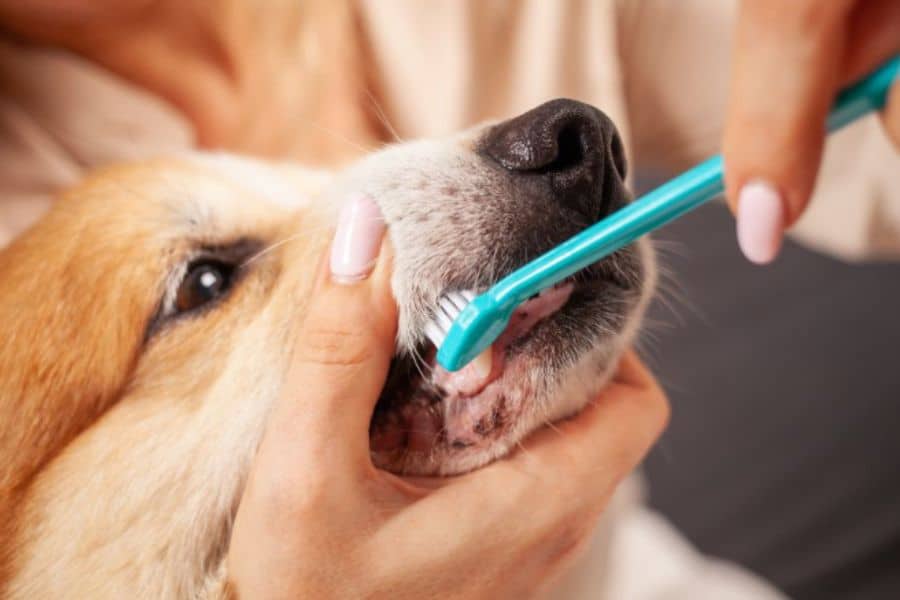
The gold standard for home pet dental care is daily toothbrushing. Use a soft-bristle brush and toothpaste made specifically for pets—human toothpaste contains ingredients that are harmful to animals.
If brushing isn’t possible right away, these alternatives provide real support:
- Dental chews and treats — Look for products with the VOHC (Veterinary Oral Health Council) seal, which confirms they’ve been tested for effectiveness.
- Water additives — These mix into your pet’s drinking water and help reduce bacterial growth.
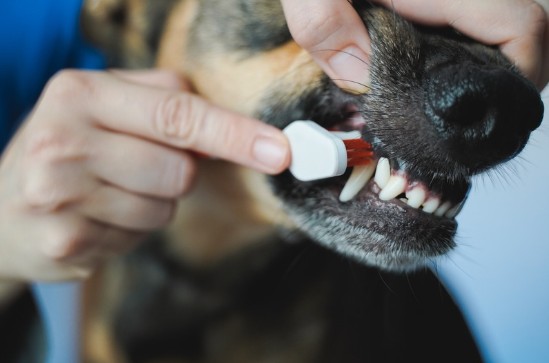
- Dental wipes — Useful for pets who resist brushing; they remove surface plaque without a brush.
- Dental diets — Certain dry kibble formulas are designed with larger, textured pieces that mechanically scrub the teeth as your pet chews.
No home product replaces a professional cleaning, but consistent home care can significantly slow the progression of dental disease between appointments.
When to Call Your Vet
If you notice any of the following, don’t wait for the next scheduled checkup:
- Persistent bad breath that doesn’t improve
- Visible tartar or discoloration on the teeth
- Bleeding, swollen, or receding gums
- Changes in eating habits or preference for soft food
- Swelling around the mouth, jaw, or face
- Pawing at the mouth or rubbing the face on surfaces
Most dental cleanings in pets are performed under general anesthesia so that every surface—including below the gum line—can be properly cleaned and examined. This is safe for healthy adult pets and the only way to address tartar that home care simply cannot reach.
Building a Dental Care Routine from Scratch
Starting early makes everything easier. Kittens and puppies adapt quickly to mouth handling. For adult pets new to brushing, go slowly:
- Start by touching the lips and muzzle gently each day for a week.
- Progress to rubbing the gum line with your finger.
- Introduce a finger brush with pet toothpaste.
- Transition to a soft toothbrush once they’re comfortable.
Even brushing every two to three days offers meaningful protection compared to no brushing at all.
Conclusion
Dental disease is progressive—but it’s also largely preventable. The earlier you catch the signs, the more options you have and the less your pet has to suffer. Combine a daily home routine with regular professional checkups, and you give your pet the best shot at a healthy, pain-free mouth for life.
If you’re in the Haymarket area and have concerns about your pet’s dental health, Dominion Valley Animal Hospital is here to help. Their team offers compassionate, thorough care and can walk you through every step—from a first dental exam to a full cleaning plan.
Frequently Asked Questions(FAQs):
1. How do I know if my pet has dental disease?
A: Common signs include bad breath, yellow or brown buildup on the teeth, red or swollen gums, drooling, and changes in eating habits. A professional exam can confirm the stage.
2. At what age should I start dental care for my pet?
A: Start handling your pet’s mouth during puppyhood or kittenhood. Annual dental checkups are recommended from age one, with cleanings as advised by your vet.
3. Can dental disease make my pet seriously ill?
A: Yes. Bacteria from diseased gums can enter the bloodstream and affect the heart, kidneys, and liver. Early treatment prevents these systemic complications.
4. Is anesthesia safe for pet dental cleanings?
A: For healthy adult pets, anesthesia is considered safe and is necessary for a thorough cleaning that reaches below the gum line. Your vet will run pre-anesthetic bloodwork to confirm your pet is a good candidate.
5. How often should my pet have a professional dental cleaning?
A: Most pets benefit from a professional cleaning once a year, though pets with advanced disease or fast-building tartar may need more frequent care.
6. Do dental chews really work for pets?
A: Products with the VOHC seal have been clinically tested and do provide measurable plaque and tartar reduction. They work best as a complement to brushing, not a replacement.