5371 Merchants View Square, Haymarket, VA 20169

If you share your home with a cat, you’ve likely faced the moment: a quiet room, a satisfied stretch, and then the unmistakable sound of claws on your couch. It can be frustrating, especially when you’ve invested in your furniture. The good news is that scratching is not bad behavior—it’s natural. The real goal is to guide it in the right direction.
This guide explains why cats scratch furniture and offers clear, practical steps on how to stop cats from scratching furniture without stress or confusion.
Why Do Cats Scratch Furniture?
Before trying to fix the behavior, it helps to understand it. Scratching serves several important purposes for cats.
1. Claw Maintenance
Cats scratch to remove the outer layer of their claws. This keeps them sharp and healthy.
2. Stretching and Exercise
Scratching allows cats to stretch their muscles, especially in their shoulders and back. It’s part of their daily movement routine.
3. Marking Territory
Cats have scent glands in their paws. Scratching leaves both a visible mark and a scent signal that says, “This is mine.”
4. Stress Relief
Scratching helps cats release tension. Changes in the home, new pets, or even boredom can increase this behavior.
5. Instinct, Not Defiance
Cats are not trying to upset you. They are acting on instinct. That’s why punishment rarely works and often creates fear instead of change.
How Do I Stop Cat Scratching Furniture?
The key is not to stop scratching altogether. It’s to redirect it to acceptable surfaces. Here’s a step-by-step approach that works in real homes.
Step 1: Provide the Right Scratching Alternatives
If your cat is scratching furniture, it may be because they don’t have a better option.
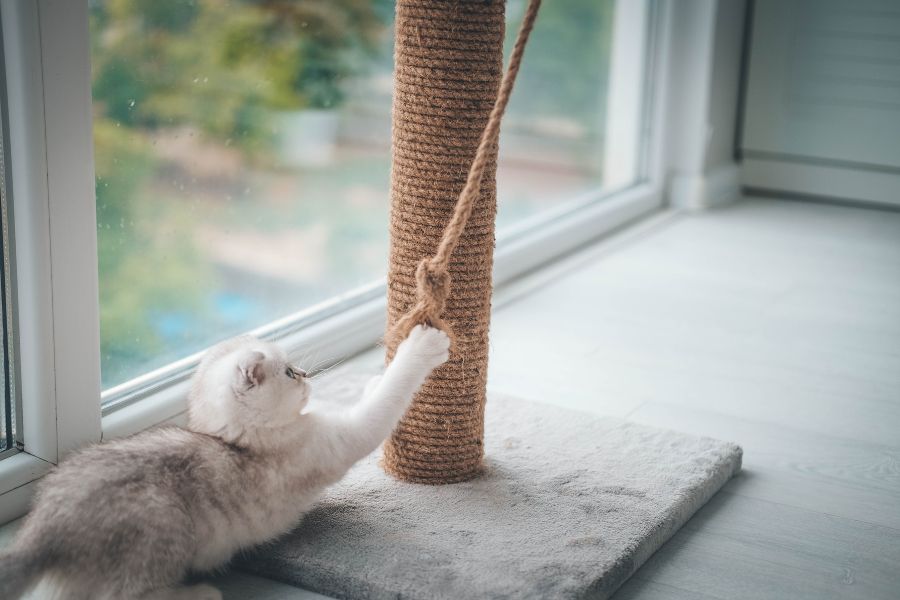
1. Choose the Right Scratching Post
Not all posts are equal. Cats have preferences.
- Vertical posts: Great for full-body stretching
- Horizontal scratchers: Ideal for cats that like to scratch carpets
- Materials: Sisal, cardboard, and wood are common favorites
2. Placement Matters
Put scratching posts where your cat already scratches. If your couch arm is the target, place a post right next to it.
3. Stability Is Key
A wobbly post won’t be used. Make sure it’s sturdy and tall enough for a full stretch.
Step 2: Make Furniture Less Appealing
While offering alternatives, you also need to reduce the appeal of your furniture.
1. Use Protective Covers
- Slipcovers or throws can protect high-risk areas
- Double-sided tape can discourage scratching (cats dislike sticky surfaces)
2. Try Pet-Safe Deterrents
There are sprays designed to repel cats without harming them. Use these on furniture surfaces.
3. Rearrange the Space
Sometimes a small change in layout can break a habit pattern.
Step 3: Reward the Right Behavior
Positive reinforcement works better than punishment.
1. Encourage Good Choices
When your cat uses a scratching post, reward them with:
- Treats
- Praise
- Playtime
2. Make It a Routine
Cats respond well to consistency. Reward them every time they use the correct surface, especially in the beginning.
Step 4: Keep Your Cat Engaged
A bored cat is more likely to scratch furniture.
1. Provide Daily Play
Interactive toys and short play sessions can reduce stress and excess energy.
2. Rotate Toys
Keeping toys fresh and interesting helps maintain engagement.
3. Create Climbing Spaces
Cat trees or shelves give cats more ways to move and explore.
Step 5: Trim Your Cat’s Nails Regularly
Shorter nails cause less damage.
- Trim nails every 2–3 weeks
- Use proper pet nail clippers
- If unsure, ask a professional for guidance
Regular nail care does not stop scratching, but reduces its impact.
Step 6: Consider Soft Nail Caps
Soft nail caps are a safe option for some cats. They cover the claws and prevent damage to furniture.
They need to be replaced every few weeks and should be applied properly.
Step 7: Address Underlying Stress or Health Issues
If scratching suddenly increases, there may be an underlying cause.
1. Look for Changes
- New pets or people
- Moving homes
- Changes in routine
2. When to Seek Help
If behavior seems excessive or paired with signs of anxiety or health issues, it may be time to consult a professional. You can visit our website to learn more about when veterinary care may be helpful for behavior concerns.
Common Mistakes to Avoid
1. Punishing Your Cat
Yelling or spraying water may stop the behavior briefly, but it creates fear and confusion.
2. Removing Scratching Options
Without alternatives, your cat will return to furniture.
3. Inconsistent Training
Switching strategies often can slow progress. Stick to one clear approach.
How to Stop Cats from Scratching Furniture Long-Term
Consistency is what makes the difference.
- Provide appealing alternatives
- Reinforce positive behavior
- Maintain a stable environment
- Stay patient
Most cats learn quickly when given clear options and positive feedback.
Signs Your Approach Is Working
You’ll know you’re on the right track when:
- Your cat uses scratching posts regularly
- Furniture damage decreases
- Your cat seems relaxed and engaged
Progress may take a few weeks, but steady improvement is a good sign.
Conclusion: Build Better Habits, Not Conflict
Stopping unwanted scratching is not about control. It’s about understanding your cat and guiding their natural behavior. When you meet their needs and set clear options, change happens naturally.
If you’re still struggling or notice sudden behavior changes, it may help to get expert input. A professional can assess your cat’s environment, health, and behavior patterns. So, book an appointment to get personalized advice and support that fits your pet’s needs.
With the right approach, you can protect your furniture and keep your cat happy at the same time.
Frequently Asked Questions(FAQs):
1. How do I stop my cat from scratching the couch?
A: Place a scratching post next to the couch and use deterrents like double-sided tape on the surface. Reward your cat when they use the post instead.
2. Why does my cat scratch furniture even with a scratching post?
A: The post may not match your cat’s preference. Try different materials, heights, or positions.
3. Are scratching posts really effective?
A: Yes. When chosen and placed correctly, they are one of the most effective tools for redirecting scratching behavior.
4. Can I train an older cat to stop scratching furniture?
A: Yes. Older cats can learn new habits with consistent reinforcement and the right setup.
5. Is declawing a safe option?
A: Declawing is not recommended. It can cause pain and long-term behavioral problems.
6. How long does it take to stop this behavior?
A: Most cats show improvement within a few weeks, but consistency is key for lasting results.